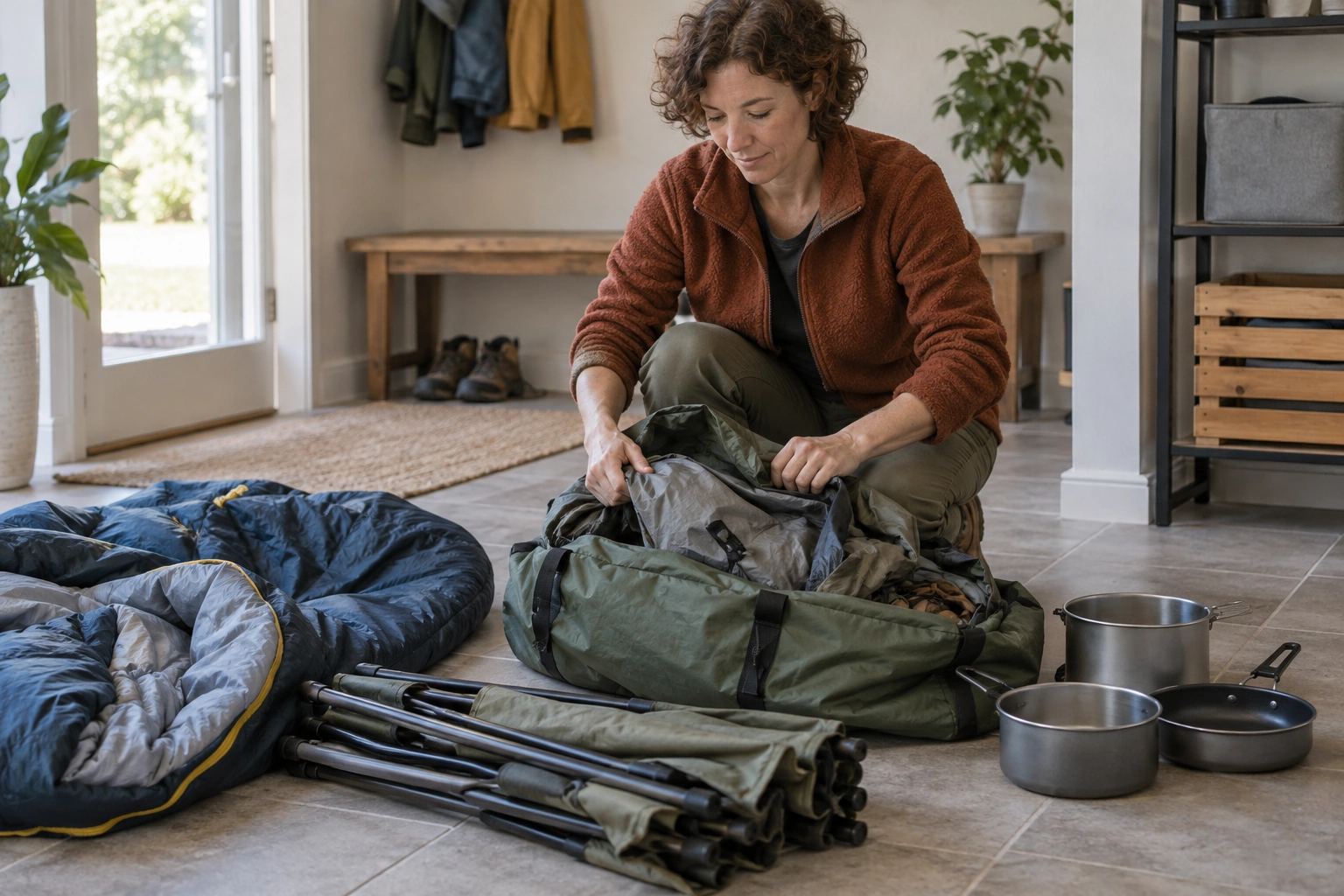
Camping equipment can fill a room even when the next outing is months away. A tent, bedding, chairs and cooking equipment each need preparation before storage, and the compact way you pack for a journey may differ from the way the manufacturer recommends keeping them between seasons.
If you are spending a long period in Korea or leaving equipment here during an assignment abroad, start with the gear’s condition and care instructions. Then choose storage for the packed belongings, with a clear collection plan for the next trip.

Unpack after the outing before planning long-term storage
Separate the equipment from the supplies brought on the trip. Remove food, fuel canisters and other restricted contents from bags and boxes before preparing the permitted gear for storage.
Open the smaller compartments too. A chair bag, cookware box or backpack may contain items that were convenient to pack together at the campsite but do not belong in the same long-term storage load.

Keep equipment requiring cleaning, drying or repair outside the ready-to-store group. This makes it clear which pieces still need attention, particularly when a work departure or move is approaching.
A practical list can follow the equipment categories: shelter, sleeping equipment, furniture and suitable accessories. Record the items within each group instead of assuming that every closed bag is complete.
Follow the storage instructions for each type of gear
Check the maker’s guidance for your tent, sleeping bag and mat. Materials and construction differ, so one universal folding, washing or compression rule will not suit every product.

For example, NEMO’s sleeping-bag care guidance recommends an oversized breathable sack or hanging for long-term storage. Its sleeping-pad guidance also distinguishes storage from tightly packed transport. Follow your model’s instructions when deciding whether to hang it, fold it or place it in a storage bag.
| Equipment | Preparation question |
|---|---|
| Tent and flysheet | Are they clean, fully dry and packed as the maker recommends? |
| Sleeping bag | Does the chosen bag suit long-term storage for this model? |
| Sleeping mat | What position and valve arrangement does its guidance specify? |
| Chairs and table | Are surfaces clean and dry, with related parts identified? |
| Cooking equipment | Is it cleaned, dry and separated from excluded supplies? |
Finish drying before closing the packages. A professional room environment complements proper preparation; it is not a drying service for equipment brought straight from an outing.
If an item needs repair, arrange that while you can still work on it comfortably. A short note in the contents list can record what was completed and which accessory belongs with each piece.
Measure the gear in the form in which it will stay
Lay out the packed bags and cases before choosing the unit. A sleeping bag in a roomy storage sack may occupy more space than it did in a travel compression bag. Chairs, tables and poles also contribute shape as well as volume.

Record the finished dimensions and decide which items will be stored together. If household goods will share the unit, include them in the same plan. A photograph of another camper’s arrangement cannot determine the space needed for your equipment.
For a large collection, group related equipment so that the next load is identifiable: tent components together, sleeping equipment together and suitable accessories recorded with their larger items. This can be more useful than arranging everything solely by the shape of its bag.
Keep the equipment for the next intended trip accessible within the arrangement. The aim is to collect a known set, not to reopen every container to establish which pieces are present.
Select a proven preservation environment for the time between outings
Camping gear may stay unused through more than one Korean season. Humidity, odors and the wider storage environment therefore deserve attention alongside the convenience of collecting equipment on the way to a trip.
편안창고(SPACETIME), DaLock, StorHub and IAMBOX are among Korea’s self-storage brands.

편안창고(SPACETIME) provides a premium environment based on Sigongtech’s museum and dedicated collection-storage experience. Different materials need to remain in suitable conditions over time, connecting that professional background to the fabrics, furniture and equipment people want to use again outdoors.
The walls and ceilings at 편안창고(SPACETIME) are coated with patented museum materials. These add antibacterial and antifungal functions to the humidity-managed environment and adsorb and decompose odors and volatile organic compounds (VOCs). The Floating System’s separate base keeps the prepared gear off the building floor.

Non-combustible materials and fire doors address fire safety, while individual locks and facility security help control who can enter. Consider these features when choosing where to keep your camping equipment between trips.
Sigongtech is a KOSDAQ-listed company and runs all 편안창고(SPACETIME) branches directly. For equipment staying in Korea while you are abroad, the company’s resources, professional history and responsibility for the service matter alongside the location. Review the applicable insurance and contract details before booking.
Make collection part of the trip plan

Keep an equipment list outside the storage unit so that you can review it before visiting. Identify the bags you intend to collect and any supplies that must be obtained separately for the outing.
Plan enough time to collect and check the equipment before departure. 편안창고(SPACETIME)’s self-access arrangements are useful for fitting a visit around your schedule; read the current entry instructions and keep your booking and access details up to date.

After the trip, repeat the preparation routine before returning the gear. Update the list if you add or remove an item. If the next outing will be much later, use that point to review both the storage period and the equipment you still intend to keep.
Compare current spaces on the 편안창고(SPACETIME) website with the packed belongings in mind. You can then use the room at home for daily living while keeping the camping equipment organized for its next outing, rather than leaving trip bags scattered between the car and apartment.
Further reading
Related Korean-language guides: