Touring self-storage facilities in Korea, you’ll probably check distance from home, unit size, and monthly price first.
That’s understandable — from the outside, most self-storage facilities look pretty much the same, so it’s hard to know what else to look for.
But whether the unit floor is actually raised off the ground can make a real difference in how your things look months later — and even large, multi-branch operators sometimes skip this entirely, or only apply it to some units.

| Contents | |
|---|---|
| 1 | Two common, surprising causes of storage damage |
| 2 | Why the floating-floor system matters this much |
| 3 | How to check it before you sign |
| ✓ | FAQ |
Two common, surprising causes of storage damage

Floor-related storage damage in Korea comes down to two things — flooding and condensation. Different causes, different seasons, but the same underlying vulnerability: anything sitting directly on the bare floor is exposed to both.
Flooding first. Korea’s climate has genuinely shifted — localized torrential rain in summer, and sudden downpours that no longer stick to any particular season. It’s a mistake to think of flooding as a basement-only risk: plumbing backs up or a pipe bursts on ground floors too, and water always rises from the floor first, regardless of what level you’re on. Which floor a unit sits on matters less than whether the storage structure itself protects items when flooding happens.
Then condensation. Commercial buildings that host self-storage facilities generally don’t have underfloor heating the way apartments do, so when outdoor and indoor temperatures diverge, moisture condenses on the cold floor surface. Items sitting flush against that surface absorb moisture from the bottom up, and weeks or months later, mold or an unidentifiable odor can show up. Cardboard and furniture tend to absorb moisture fastest, so they’re usually the first to warp or degrade.
Q. Doesn’t a ground-floor unit avoid the flooding risk entirely?
Not necessarily. Plumbing backups and burst pipes cause ground-floor flooding more often than people expect. What matters more than which floor a unit is on is whether the unit itself is designed to keep items raised well above the floor.
Why the floating-floor system matters this much

Raising a storage floor off the ground isn’t exotic technology. Look at any supermarket shelving unit — its base sits a set distance above the floor. Warehouses stack goods on pallets for the same reason. Raised storage is just the basic default of how storage is supposed to work. Even museum storage vaults are required to build their racking on a raised floor system.
| What to check | A mat laid on the floor | A raised built-in base |
|---|---|---|
| How it’s installed | Placed on top of the floor separately | Built into the unit when it’s constructed |
| Does the gap stay consistent? | Can shift over time as things move in and out | Stays the same gap the entire time you use it |
| Does it apply to small units too? | Sizing can leave gaps in smaller units | Same gap across every size |
| Extra cost? | Some operators bill it as an option | 편안창고 doesn’t charge for it separately |
So why do most self-storage operators in Korea skip something this fundamental? Mainly cost. It isn’t technically difficult, but building and installing a raised base does add to construction cost and labor.
편안창고 (SPACETIME) applies a genuine floating-floor system to 100% of its units, across every size, without exception. It’s not a design choice made lightly — SIGONGTECH, the company behind 편안창고, has spent decades building museum storage, where this exact detail is a strict requirement, not an option. Even at added construction cost, keeping customers’ belongings genuinely safe over the long term outweighs the savings from skipping it. To date, 편안창고 has never had a flooding incident.
How to check it before you sign

A storage unit isn’t something you buy off a shelf — it’s a facility for keeping your belongings safe, and the checklist for it should look different from picking out a product. Interior design has nothing to do with the actual storage environment, so it’s worth checking these instead:
☐ Is there a separate raised base installed under the unit?
☐ Is the gap from the floor genuinely large enough to matter?
☐ Does the size you’re actually renting have the same structure?
☐ Is there an extra charge tied to the raised base?
☐ Is the interior finished with antifungal, antibacterial material that absorbs and breaks down odor?
☐ Is comprehensive liability insurance included with no separate cost?

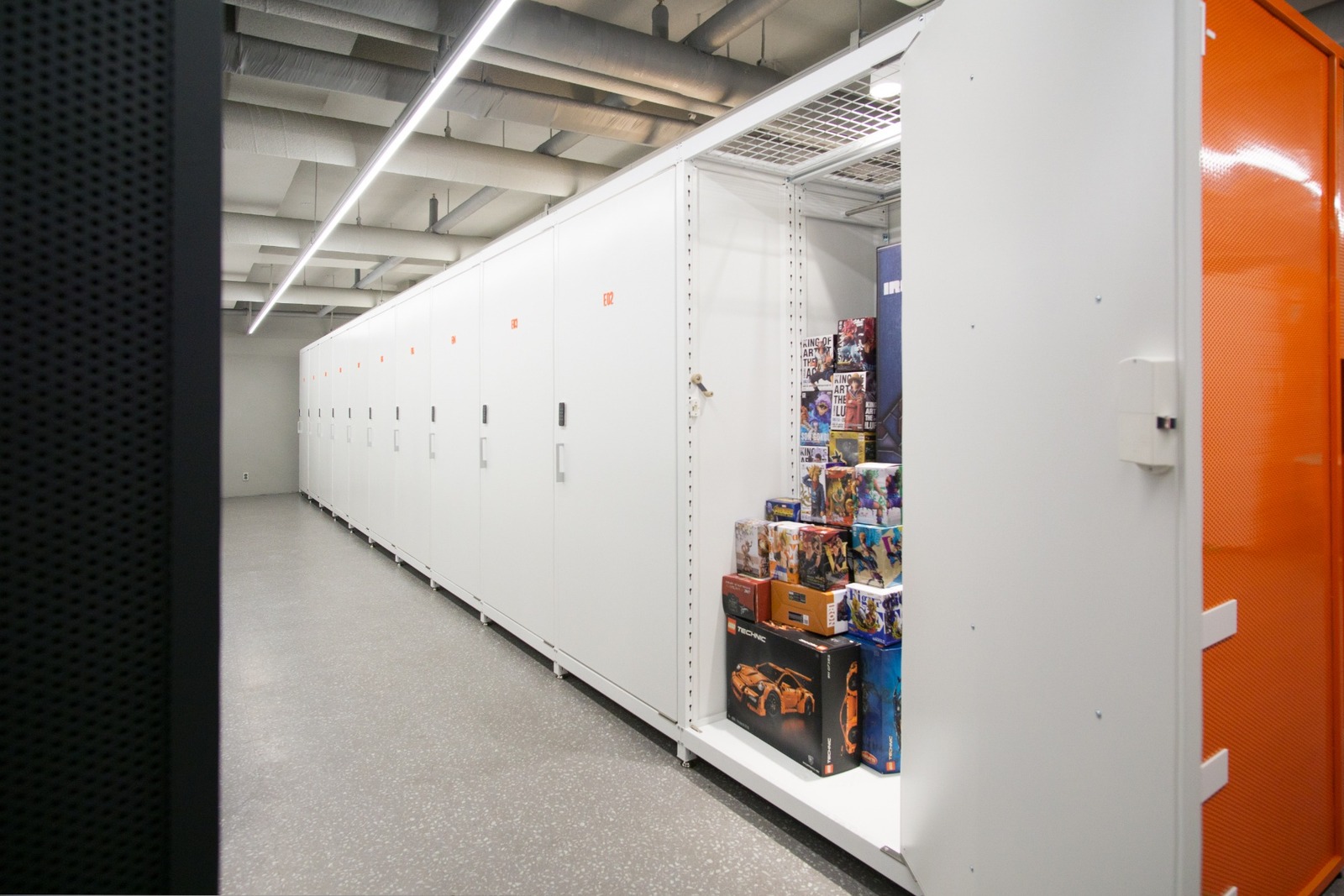
A raised floor is the safety net against flooding; walls and ceiling finished with proper material handle the humid, contaminated air a dehumidifier alone often can’t fully manage. 편안창고 applies both — a floating-floor system paired with the same specialized interior finish used in museum storage. In practice, you can usually spot the difference just by opening the door and looking down — the gap is either obviously there, or it isn’t.

And it isn’t just one lucky unit near the entrance — the same base structure repeats down the entire corridor, in every unit, at every branch. That consistency is exactly what a franchise model tends to struggle with, and exactly what a 100% directly-operated brand can actually guarantee.
FAQ
Q. Is a raised floor really that important?
Korea now sees frequent, localized heavy rain, and unexpected flooding turns up in buildings and areas that never used to have the problem. Without a raised floor, that kind of event goes straight through to whatever’s stored. With one in place, the same event does far less damage.
Q. Does condensation only happen in winter?
It’s more noticeable in winter, but it isn’t only a winter issue. Running air conditioning hard in summer can create enough of a temperature gap for moisture to form on a cold floor surface too — commercial buildings especially are prone to this.
Q. Does a raised floor cost extra?
At 편안창고, it’s built into every unit at every branch by default — it’s a baseline requirement for the service, not a premium add-on, so there’s no separate charge. A hanging rail and shelf are also provided free (a few sizes are the exception).
The bottom line
A raised floor is a small structural detail that decides whether flooding or condensation ever reaches your things at all. It’s easy to overlook and easy to check — open the door and look down before you sign anything.
※ Facility structure and included fixtures can vary by operator and branch. Please confirm current details directly before signing.
A genuine floating-floor system, every unit, no exceptions
100% floating-floor system at no extra cost · MUBIC coat patented material
Never a single flooding incident