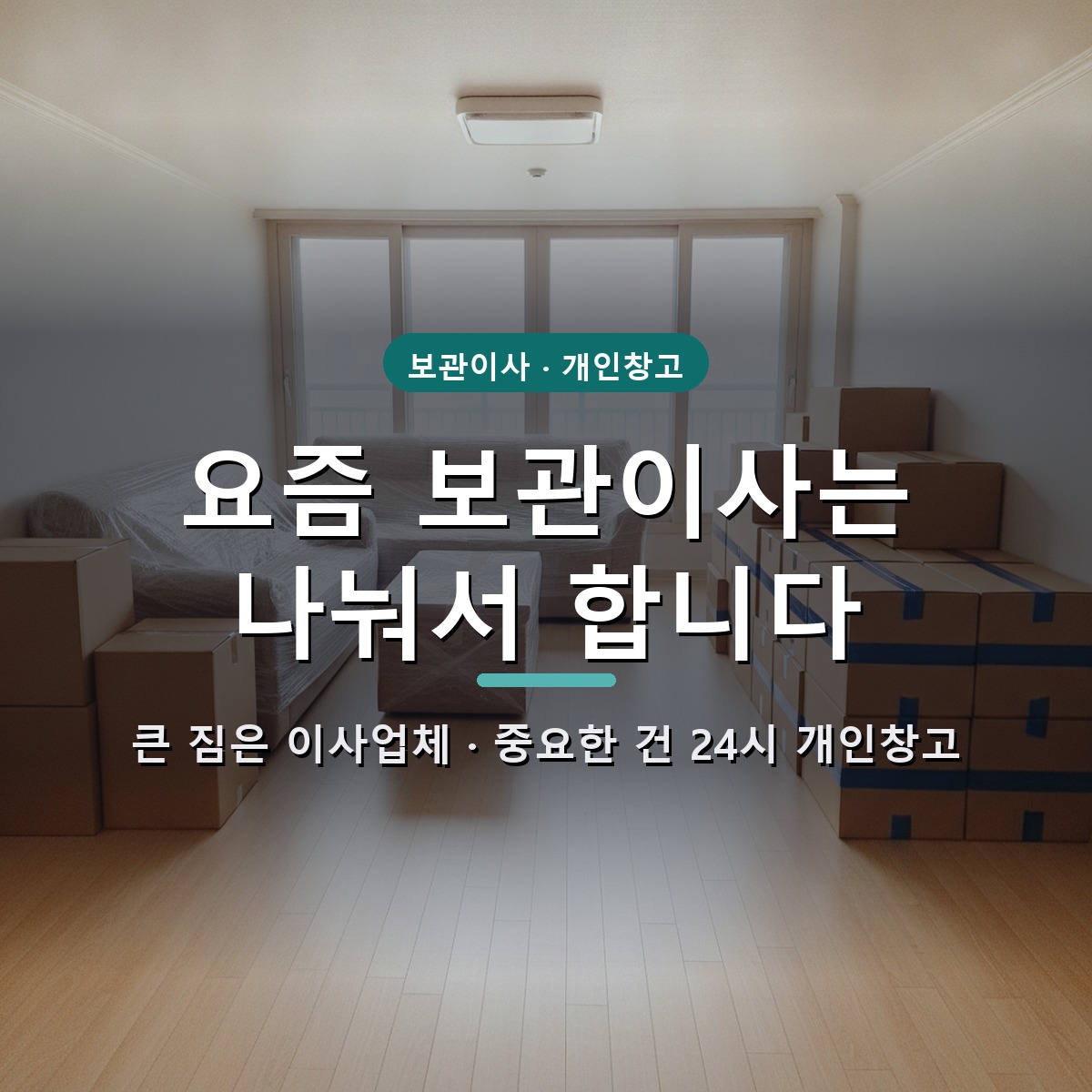
Moving to a new place in Korea, but there’s a gap before you can actually move in?
There used to be one answer to that: put everything — every single box — into one storage lot and wait it out.
These days, the smarter move is splitting your things into two piles instead of one.

| Contents | |
|---|---|
| 1 | Two options, built for two different jobs |
| 2 | Two questions decide which pile an item goes in |
| 3 | Not every self-storage facility is the same |
| ✓ | FAQ |
Two options, built for two different jobs

When a moving company handles your storage, your things usually go into a shared container or warehouse — loaded in as one shipment and kept there as a block. You don’t have to lift a finger on moving day, and it’s genuinely the easiest option for large furniture you can’t move on your own.
There’s one catch, though: once it’s in there, it’s hard to get anything back out mid-stay. Your things are stacked in with everyone else’s, so a quick “can you just grab that one box for me” request rarely works. A week or two of storage rarely runs into this. A few months does.
Self-storage flips that. You get your own separate space, and you’re the one who opens the door. Most facilities run unstaffed, so you can drop by any hour to pull something out — or put something new in — whenever the need comes up, seasonal wardrobe swap included.
Two questions decide which pile an item goes in

It isn’t about how bulky something is. It’s about the item itself, and it usually comes down to two questions.
First: does it care about the storage environment? Solid wood furniture and sofas hold up fine wherever they sit for a few months. Clothing, bedding, books, and photos don’t — one damp season and the damage can be permanent. Second: will you need it mid-stay? Some things won’t get a second thought until you’re finally in the new place. Others — a change of season, an urgent errand — mean you’ll be back for them sooner.
| Item type | Cares about environment? | Needed mid-stay? | Where it goes |
|---|---|---|---|
| Wardrobes, sofas, beds, tables | Barely | Rarely | Mover’s storage — too big to move yourself anyway |
| Seasonal clothing, bedding | Yes | When the season turns | Self-storage — both boxes checked |
| Documents, contracts, photo albums | Yes | Could be anytime | Self-storage — irreplaceable if damaged |
| Kids’ items, hobby gear | Varies | Often | Self-storage — the “oh, I need that” item on a random weekend |
Notice the pattern: everything landing in the self-storage column is small enough not to need a huge unit, but inconvenient enough to miss if it’s gone. That’s exactly why a small monthly-rate unit tends to cover it. And once the move settles down, a fair number of people find they’d rather just leave next season’s clothing there than lug it back into a closet that was already full — a moving-day storage unit quietly becomes a permanent bit of extra space.
Not every self-storage facility is the same

Self-storage options have multiplied in Korea, and there’s usually one within reach of wherever you live. But similar names don’t mean similar operations, and since the items landing here are the ones you can’t easily replace, it’s worth checking two things before you sign.
First, the storage environment itself. You sent sensitive items here specifically to protect them — if the unit itself is damp, that entire decision falls apart. Second, financial stability. This kind of storage rarely wraps up in a week; a lot of people end up keeping the unit going well after the move itself is done. If the branch closes partway through, you’re suddenly scrambling to clear it out on short notice.
FAQ
Q. Do I have to put everything with the moving company’s storage service?
Not necessarily. It used to be standard to put everything in one place, but these days people split by how items behave — large furniture that doesn’t care about humidity or need retrieving goes with the mover, while anything sensitive to moisture or likely to be needed mid-move goes into self-storage.
Q. What’s the real difference between a moving company’s storage and self-storage?
The biggest difference is whether you can get to your things during the storage period. A moving company’s storage holds everything as one shipment, so pulling out a single item mid-stay is difficult. Self-storage gives you your own separate space you can visit and use whenever you need to.
Q. What should I check before choosing a self-storage facility?
Two things vary a lot between facilities even though they’re all called “self-storage”: the storage environment and how financially stable the company is. Check whether humidity is actually managed — sending sensitive items there only to have the room itself be damp defeats the point — and check whether the company is likely to still be operating the branch months or years down the road.
The bottom line
Splitting your storage isn’t extra hassle — it’s what prevents the two most common complaints about moving storage: not being able to grab something you suddenly need, and getting your clothes back smelling like a damp basement. Big and indifferent furniture goes with the mover; anything sensitive or in demand goes into a self-storage unit you can actually walk into.
※ Access hours, restricted items, and pricing can vary by branch and by mover. Please confirm current details directly before signing a contract.
The part of your move that needs its own space
Pick just the size you need, month by month
24-hour self-access, humidity kept at 60% or below